
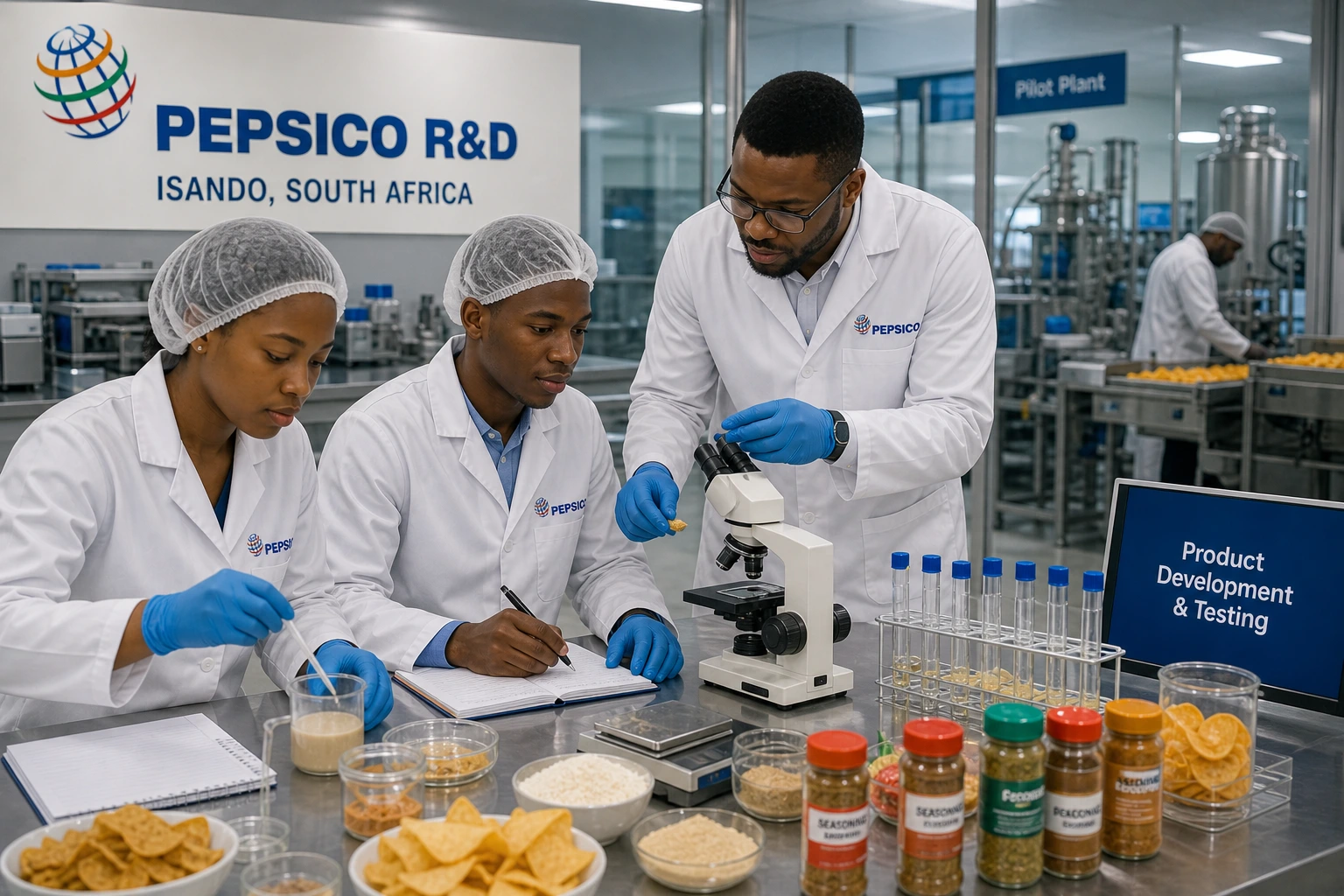
PepsiCo R&D WIL Learnership 2026 is now open in Isando for South African students in Food Technology, Biochemistry, and Engineering. Discover requirements, benefits, and application insights.
PepsiCo R&D WIL Learnership 2026: Why This Opportunity Could Shape South Africa’s Future Food Scientists
South Africa’s food manufacturing sector is evolving rapidly, driven by innovation, product reformulation, sustainability demands, and shifting consumer preferences. For students pursuing qualifications in food science, engineering, and biochemical disciplines, practical exposure is no longer optional — it has become a decisive factor in employability.
The PepsiCo R&D WIL Learnership 2026 arrives at a particularly important time for final-year students looking to transition from theory into industry practice.
Offered by PepsiCo, this Work Integrated Learning opportunity provides hands-on exposure inside one of the world’s most established food manufacturing environments.
For students who have spent years mastering theory in lecture halls and laboratories, this programme offers something invaluable:
the opportunity to apply that knowledge in real production systems where innovation, quality control, and food science directly impact products consumed at scale.
ALSO APPLY FOR Learner Radiation Protection Officer Internship 2026: Why This Rare Nuclear Safety Opportunity Matters
Why Work Integrated Learning Has Become Essential in South Africa
South Africa’s graduate employment landscape has shifted significantly.
While academic qualifications remain important, employers increasingly expect graduates to demonstrate:
- Practical application of technical knowledge
- Exposure to industry-standard processes
- Familiarity with compliance systems
- Problem-solving in operational environments
This is especially true in sectors like food manufacturing and research.
The gap between university theory and industrial execution remains one of the biggest challenges facing graduates.
A student may understand moisture migration models, seasoning chemistry, or process engineering equations academically, yet still lack familiarity with:
- Factory trial protocols
- Production troubleshooting
- Pilot plant coordination
- Regulatory implementation
The PepsiCo R&D WIL Learnership 2026 is designed to close that gap.
It offers structured workplace integration where learners move beyond theoretical understanding into active technical contribution.
This makes the programme strategically valuable for any student aiming for long-term success in food science and industrial R&D.
What Makes the PepsiCo R&D WIL Learnership 2026 Unique?
Not all learnerships offer deep technical immersion.
Some focus heavily on observation or basic support tasks.
The PepsiCo R&D WIL Learnership 2026 stands out because it places learners directly into Research and Development functions, one of the most intellectually demanding areas within food manufacturing.
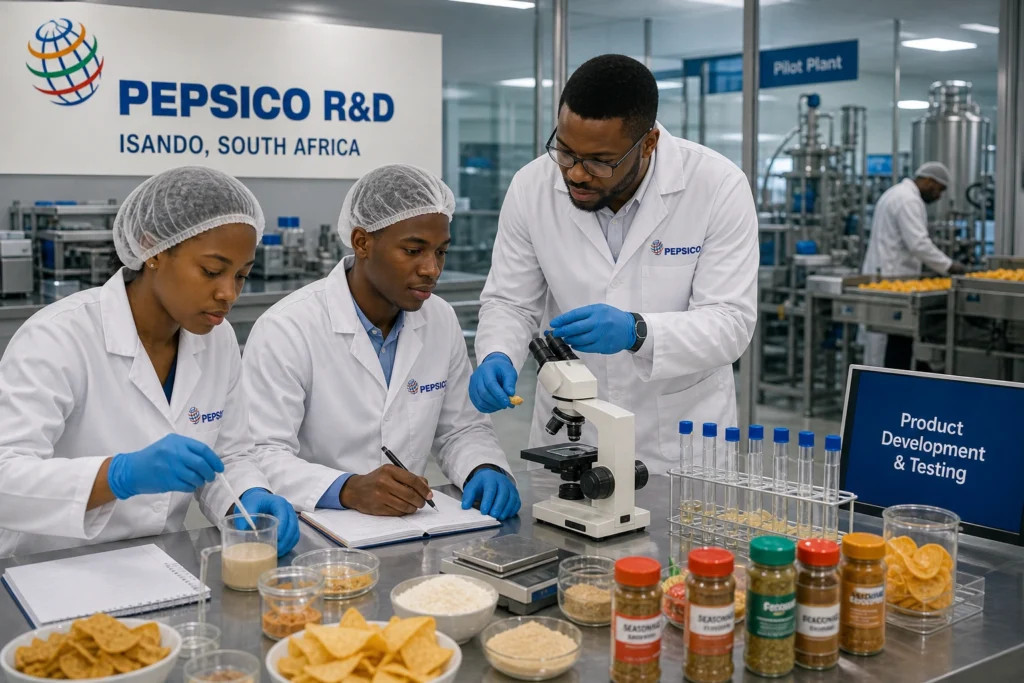
Participants will engage in seasoning-focused product development, pilot plant testing, laboratory analysis, and technical project support.
This exposure matters because R&D sits at the intersection of:
- Scientific experimentation
- Consumer insights
- Product innovation
- Manufacturing feasibility
- Regulatory compliance
Working in this space provides learners with a rare perspective into how food products move from concept to commercial production.
For aspiring food technologists, product developers, and process engineers, this is precisely the kind of exposure that can shape future career direction.
The Growing Importance of Food Innovation in South Africa
The relevance of this opportunity becomes clearer when viewed against broader industry trends.
South Africa’s food manufacturing sector is under increasing pressure to innovate due to:
Changing Consumer Preferences
Consumers are demanding healthier, lower-sodium, lower-fat, and more functional food products.
This creates constant demand for formulation research and seasoning innovation.
Cost Efficiency Pressures
Manufacturers need to reduce waste, optimise ingredients, and improve production efficiency.
R&D teams play a central role here.
Regulatory Evolution
Food safety and compliance standards continue to tighten.
Technical teams must ensure products meet legal requirements.
Product Differentiation
In highly competitive snack and food categories, flavour innovation often determines market success.
This is where seasoning research becomes commercially critical.
The PepsiCo R&D WIL Learnership 2026 gives learners exposure to these exact challenges.
That makes the programme more than just work experience.
It is exposure to the future of food manufacturing.
Analytical Skills Development: Why This Learnership Builds Career-Ready Talent
One of the strongest aspects of the programme is its emphasis on analytical testing.
Learners will support laboratory procedures such as:
- Salt analysis
- Oil analysis
- Bulk density analysis
- Particle size measurement
- Moisture analysis
These are not routine tasks without value.
They represent core technical competencies used across food manufacturing, quality assurance, and product development.
Understanding these analyses teaches learners how technical variables influence:
- Product stability
- Shelf life
- Taste consistency
- Production efficiency
- Consumer experience
For example, incorrect moisture levels can affect texture and shelf stability.
Particle size inconsistency may impact seasoning distribution.
Oil content variations can alter flavour delivery.
Exposure to these relationships builds systems-thinking — a highly valuable capability in industrial food science.
Graduates who understand these technical interactions are significantly more employable.
Why PepsiCo’s Global Environment Matters
Working within a multinational environment offers advantages beyond technical training.
A company like PepsiCo operates under globally standardised systems and rigorous process controls.
This means learners gain exposure to:
- International quality benchmarks
- Structured reporting systems
- Global R&D methodologies
- Cross-functional collaboration models
These experiences shape professional maturity.
They teach learners how high-performing technical organisations function.
This is important because graduates who have worked in globally benchmarked environments often adapt faster to future roles.
The PepsiCo R&D WIL Learnership 2026 therefore provides not only technical development, but organisational exposure that strengthens long-term employability.
Who Should Seriously Consider Applying?
The programme is particularly suited to students who want careers in:
- Food product development
- Research and development
- Quality assurance
- Process engineering
- Technical innovation
- Manufacturing optimisation
Applicants studying:
- Biochemistry
- Food Technology
- Engineering
should view this as a strategic stepping stone.
However, academic eligibility alone is not enough.
PepsiCo is likely to prioritise candidates who demonstrate:
Intellectual Curiosity
R&D environments reward those who ask questions and seek understanding.
Analytical Precision
Technical detail matters.
Initiative
Learners must engage actively.
Adaptability
Factory environments can shift rapidly.
Collaboration
Cross-functional teamwork is essential.
Students who combine academic competence with these traits will stand out.
Quick Facts: PepsiCo R&D WIL Learnership 2026
- Closing Date: Not stated in the official advert
- Location: Isando, South Africa
- Duration: Not stated in the official advert
- Positions Available: Not stated in the official advert
- Reference Number: 444068
- Stipend: Not stated in the official advert
- Required Gender: Not stated in the official advert
- Name of Company: PepsiCo
Application Strategy: How to Improve Your Chances
Competition for multinational learnerships is typically intense.
A generic application is unlikely to stand out.
To strengthen your submission for the PepsiCo R&D WIL Learnership 2026, focus on:
Highlight Relevant Coursework
Mention modules such as:
- Food chemistry
- Process engineering
- Analytical chemistry
- Bioprocessing
- Food microbiology
Showcase Technical Projects
Include research projects, lab reports, or pilot-scale practicals.
Demonstrate Analytical Competence
Mention statistical software, data interpretation experience, or laboratory techniques.
Tailor Your Motivation
Explain specifically why food R&D interests you.
Avoid generic statements.
Recruiters want to see clear alignment.
What This Means Going Forward
The PepsiCo R&D WIL Learnership 2026 reflects broader changes in how technical talent is being developed.
Industry is increasingly prioritising:
- Applied learning
- Early technical integration
- Workplace-based capability development
This trend will likely continue.
Graduates who combine academic achievement with workplace exposure will have a clear advantage.
For South Africa’s food science ecosystem, programmes like this help build a stronger pipeline of innovation-driven technical professionals.
For students, the implication is clear:
waiting until graduation to seek industry exposure is becoming increasingly risky.
Early practical integration is fast becoming essential.
How to Apply For PepsiCo R&D WIL Learnership
Click here to apply for PepsiCo R&D WIL Learnership 2026:
https://www.pepsicojobs.com/main/jobs/444068?lang=en-us&iisn=linkedin
FAQs About PepsiCo R&D WIL Learnership 2026
1. Can students who are not in their final year apply?
No. The programme is specifically designed for final-year students or those who have completed the theoretical component of their qualification.
2. Is prior laboratory experience required?
It is not officially stated, but relevant lab or technical project experience will likely strengthen your application.
Conclusion-PepsiCo R&D WIL Learnership
The PepsiCo R&D WIL Learnership 2026 offers a meaningful opportunity for South African students to gain practical exposure inside one of the world’s leading food and beverage companies.
Its emphasis on seasoning research, pilot plant trials, laboratory analysis, and product development makes it especially valuable for technically driven students.
For applicants serious about careers in food science, engineering, or R&D, this is more than just a learnership.
It is a strategic platform for entering an increasingly competitive technical workforce.
Those who prepare strong, focused applications and demonstrate genuine interest in food innovation will place themselves in a stronger position for future success.




Leave a Reply