
Explore the Code 10 Driver Disinfecting job at Grain Field Chickens in Reitz. Learn requirements, responsibilities, and why this role is vital to South Africa’s poultry industry.
Introduction: Why Code 10 Driver Disinfecting job Matters Now
The Code 10 Driver Disinfecting job at Grain Field Chickens comes at a time when South Africa’s poultry industry is under increasing pressure to maintain strict biosecurity standards. With rising concerns around disease outbreaks such as avian influenza and the need for efficient food production systems, roles focused on sanitation and farm hygiene are no longer peripheral—they are central to agricultural sustainability.
This position, based in Reitz, reflects a broader shift in agribusiness where operational roles are evolving into technically informed, compliance-driven functions. For job seekers, especially those with a Code 10 licence and PDP, this opportunity represents more than just driving—it is about becoming part of a critical control system within the poultry value chain.
ALSO APPLY FOR Code 14 Driver Job in Johannesburg: Opportunities, Requirements, and Industry Insights in South Africa
Quick Facts About Code 10 Driver Disinfecting job
- Closing date: 1 April 2026
- Location: Reitz, Free State
- Duration: Not stated in the official advert
- Positions available: Not stated in the official advert
- Reference number: Not stated in the official advert
- Stipend/Salary: Not stated in the official advert
Understanding the Code 10 Driver Disinfecting Role: More Than Just Driving
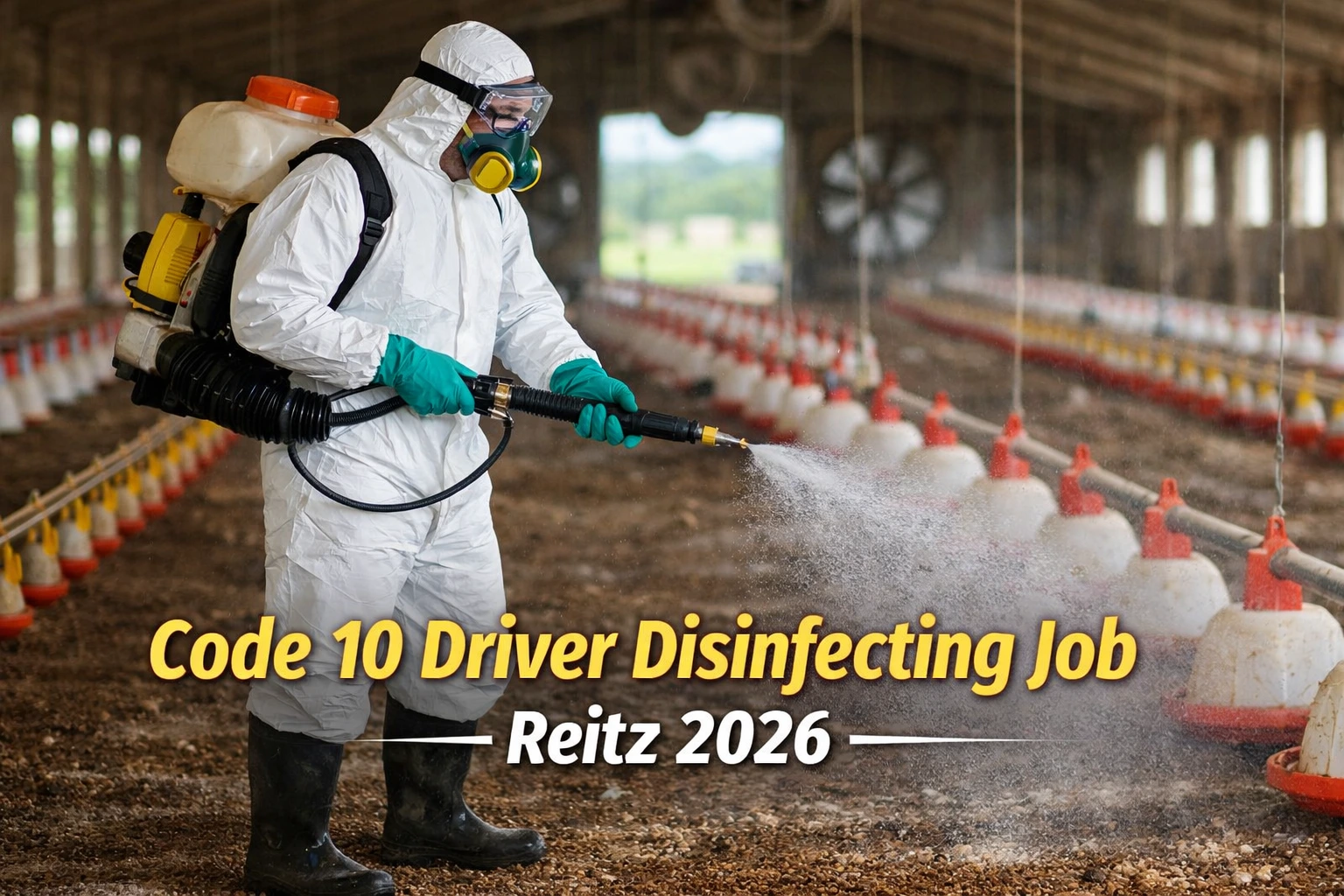
At its core, the Code 10 Driver Disinfecting job blends logistics with agricultural biosecurity. The successful candidate will spend 80%–90% of their time on the road, traveling independently between farms to disinfect broiler houses.
However, this is not a traditional driving job. It involves:
- Preparing disinfectant chemicals at precise dilution levels
- Operating specialized disinfecting equipment
- Conducting post-cleaning sanitation processes
- Collecting swabs for hygiene verification
- Completing compliance documentation
This hybrid nature of the role highlights a growing trend: manual roles in agriculture increasingly require technical awareness and procedural discipline.
In essence, the driver becomes a mobile biosecurity technician—responsible for preventing contamination between poultry environments.
The Growing Importance of Biosecurity in Poultry Farming
The poultry sector is one of South Africa’s largest agricultural industries, contributing significantly to food security and employment. However, it is also highly vulnerable to disease outbreaks, which can devastate production.
Biosecurity measures—like those performed in this role—are essential because they:
- Prevent the spread of pathogens between farms
- Protect livestock health and productivity
- Ensure compliance with export and safety standards
- Reduce financial losses linked to contamination
Disinfecting broiler houses after cleaning is a non-negotiable step in modern poultry farming. The requirement to shower onsite and disinfect vehicles further reinforces the strict protocols involved.
This job reflects a broader industry reality: biosecurity is now a frontline defense, not a back-end process.
Skills and Requirements: What Sets Candidates Apart
The job requirements for the Code 10 Driver Disinfecting job may appear straightforward, but they reveal deeper expectations about the nature of the work.
Core Requirements For Code 10 Driver Disinfecting job
- Grade 12 or NQF Level 4
- Code 10 driver’s licence with PDP
- Clear criminal record
- Ability to communicate in English and Afrikaans
Advantageous Skills
- Technical background
- Knowledge of poultry house layouts
Critical Soft Skills
- Independent work capability
- Strong communication with farm stakeholders
- Attention to detail in reporting and procedures
The emphasis on bilingual communication is particularly important in rural agricultural settings, where farm operators and contract growers may predominantly speak Afrikaans.
Meanwhile, the need for independence reflects the reality that workers will often operate alone in remote environments, making self-discipline and accountability essential traits.
Operational Realities: Life on the Road in Rural Agriculture
Code 10 Driver Disinfecting
Unlike urban driving jobs, this role involves navigating rural landscapes and farm environments daily. This introduces unique challenges:
- Long-distance travel between farms
- Exposure to varying weather conditions
- Strict adherence to hygiene protocols
- Limited supervision during tasks
The expectation to work overtime, including weekends, also reflects the non-stop nature of poultry production cycles. Chickens are raised in controlled environments where timing is critical, and sanitation cannot be delayed.
From an employment perspective, this means candidates must be prepared for:
- Physically demanding tasks
- Flexible working hours
- High responsibility with minimal oversight
These factors make the job suitable for individuals who value independence but can maintain high standards without constant supervision.
Compliance, Documentation, and Accountability
One of the most underestimated aspects of this role is documentation and reporting.
Drivers are required to:
- Complete disinfecting checklists
- Record chemical usage
- Document swab results
- Follow manufacturer instructions precisely
This aligns with broader industry trends where traceability and compliance are becoming mandatory. Agricultural companies must demonstrate adherence to safety standards, especially when supplying large retailers or export markets.
As a result, even operational roles now demand administrative accuracy and procedural consistency.
This shift signals a move toward data-driven agriculture, where every action—from disinfecting to transport—is recorded and verified.
Employment Equity and Inclusive Hiring
VKB Agriculture, the parent company, emphasizes its commitment to:
- Employment Equity targets
- Inclusive hiring practices
- Opportunities for people with disabilities
This reflects a broader transformation agenda within South Africa’s agricultural sector, where companies are aligning recruitment with national equity goals.
For job seekers, this means:
- Increased opportunities across diverse groups
- Transparent recruitment processes
- Structured career pathways within corporate farming environments
What This Means Going Forward-Code 10 Driver Disinfecting job
The Code 10 Driver Disinfecting job is a clear indicator of how agricultural employment is evolving in South Africa.
Looking ahead:
- Biosecurity roles will expand: As disease risks grow, more positions focused on sanitation and compliance will emerge.
- Technical skills will become essential: Even entry-level roles will require understanding of procedures, equipment, and safety standards.
- Rural jobs will gain strategic importance: Positions in towns like Reitz will play a critical role in national food systems.
- Hybrid roles will dominate: Jobs combining driving, technical work, and reporting will become more common.
For job seekers, this means adapting to a workforce where practical skills must be combined with technical awareness and accountability.
APPLY FOR DRIVER CODE 10
FAQs-Code 10 Driver Disinfecting job
1. What does a Code 10 Driver Disinfecting job involve?
It involves driving between farms and disinfecting poultry houses using approved chemicals and procedures.
2. Is experience in poultry farming required?
Not mandatory, but knowledge of chicken house layouts or a technical background is advantageous.
3. Do I need a PDP for this job?
Yes, a valid Code 10 licence with a Professional Driving Permit (PDP) is required.
4. Will I work alone or in a team?
Mostly alone, as the role requires independent travel and task execution.
5. Are weekends included in the work schedule?
Yes, candidates must be willing to work overtime, including Saturdays and Sundays.
Conclusion-Code 10 Driver Disinfecting job
The Code 10 Driver Disinfecting job at Grain Field Chickens is more than a routine driving position—it is a frontline role in maintaining the health and efficiency of South Africa’s poultry industry. By combining mobility, technical execution, and strict adherence to biosecurity protocols, this job highlights the increasing complexity of agricultural operations.
For candidates willing to embrace responsibility, independence, and continuous learning, this opportunity offers a pathway into a structured and evolving sector that remains essential to the country’s economy.